Recurring Headaches? Understanding the Causes and Treatment Approaches for Chronic Headaches from a TCM Perspective
Headaches are a common discomfort in daily life. However, if they keep coming back and even affect your work or sleep, they should not simply be dismissed as ordinary fatigue.
Why do some people experience a throbbing or pressure-like headache, while others feel a sharp, stabbing pain?
From a Traditional Chinese Medicine (TCM) perspective, different types of headaches may be associated with different underlying body conditions. Understanding the characteristics, possible causes, and treatment approaches can help you better recognise the signals your body is sending.
What Are Chronic Headaches?
Occasional headaches are common, but if they occur frequently or almost every day, it is important to pay closer attention.
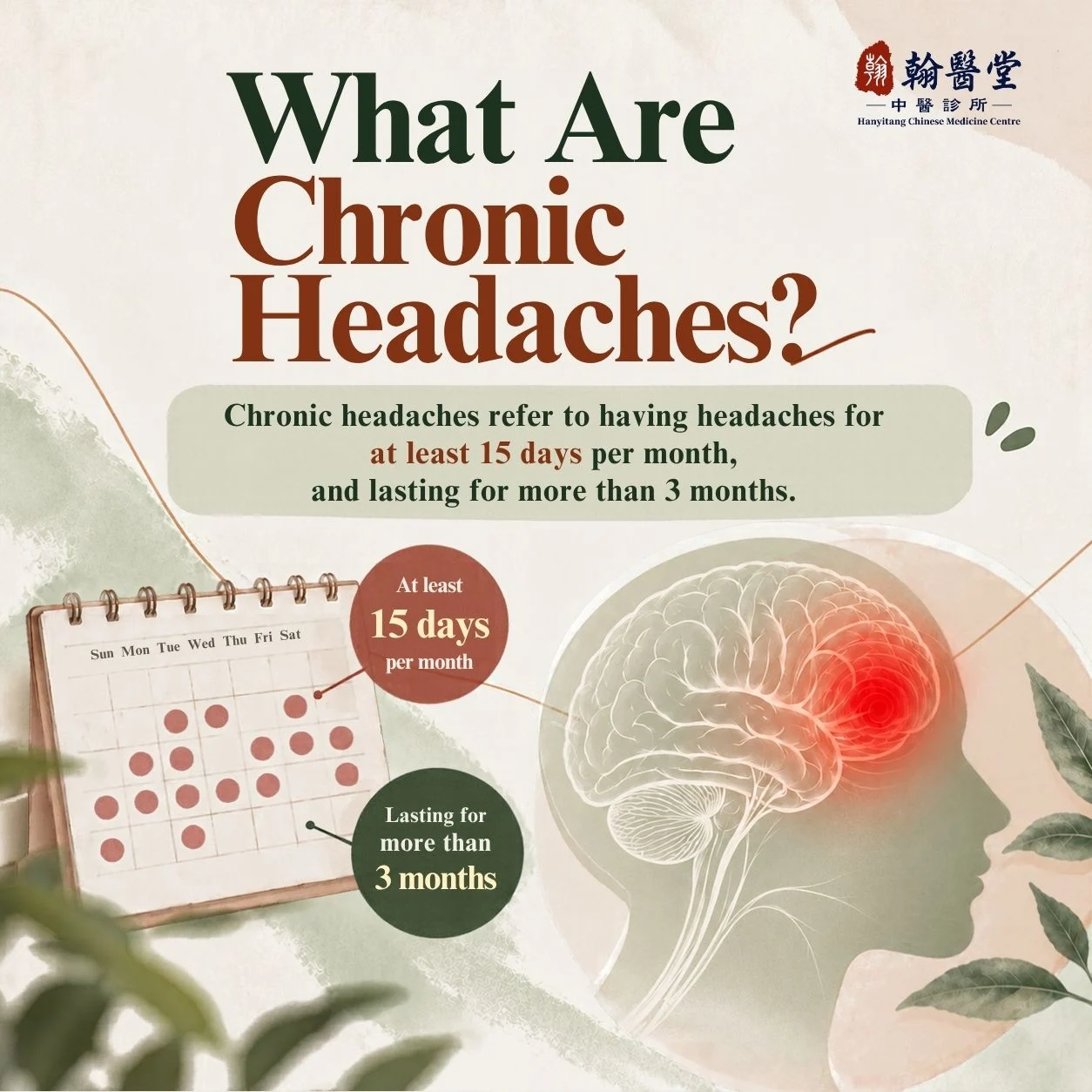
Generally, chronic daily headaches are defined as headaches occurring at least 15 days per month for more than 3 months.
If you frequently experience the following symptoms, it may be worth seeking medical advice:
- Recurring headaches that interfere with daily activities
- Frequent pressure-like, dull, or persistent headaches
- Headaches that do not improve even after resting
- Frequent reliance on painkillers to relieve symptoms
However, frequent headaches do not necessarily mean you have chronic headaches. A proper medical assessment is still needed.
Why Do Headaches Keep Coming Back?
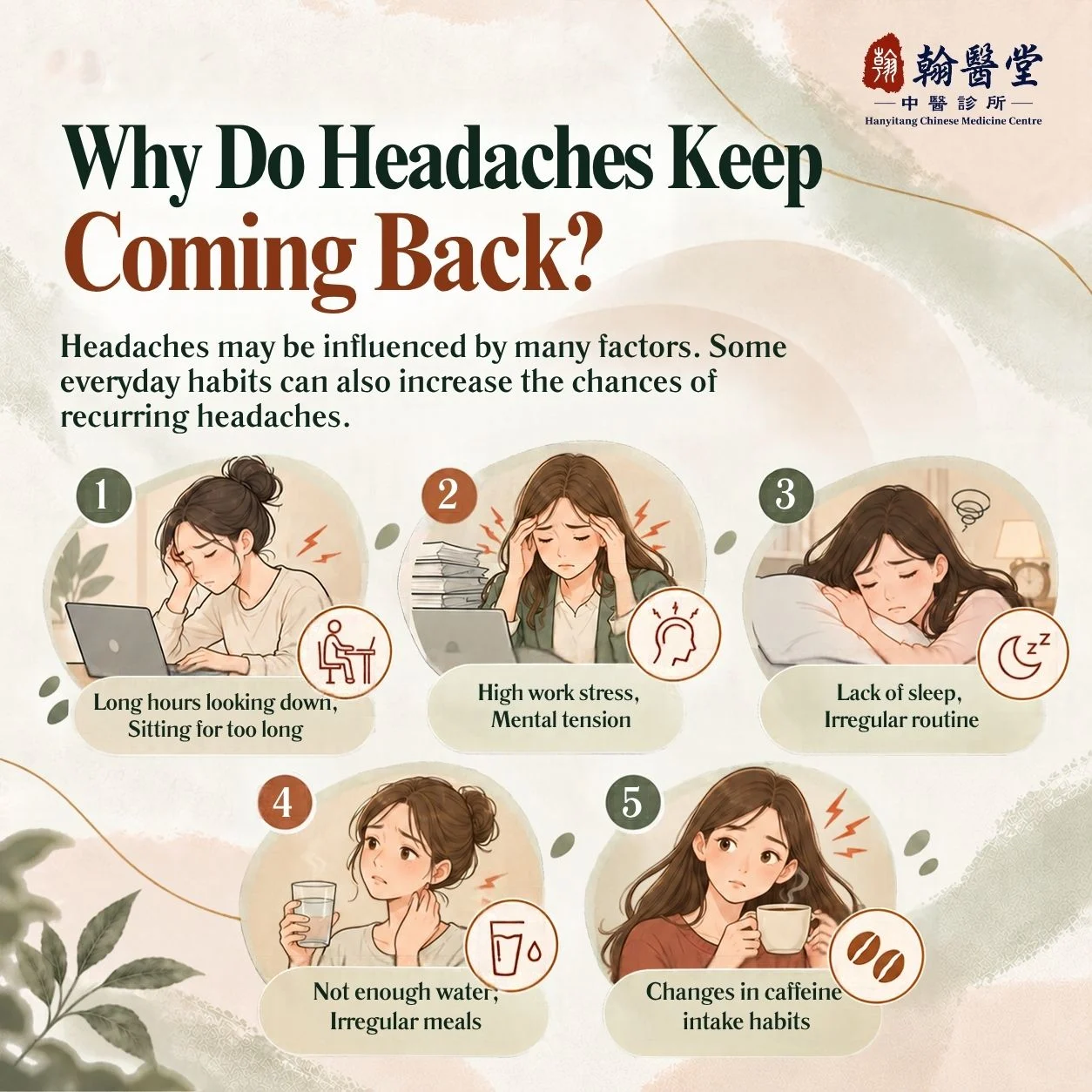
Headaches can be influenced by various factors. Certain daily habits may also increase the likelihood of experiencing headaches.
- Prolonged Screen Time and Sitting
Spending long hours working on a computer or looking down at your phone can cause tension in the neck and shoulder muscles, which may contribute to certain types of headaches.
- Work Stress and Mental Tension
Long-term stress may trigger tension-type headaches or migraines.
- Lack of Sleep and Irregular Sleep Patterns
Frequently staying up late or experiencing poor sleep quality may increase the likelihood of headaches.
- Dehydration and Irregular Meals
Especially in Malaysia’s hot weather, not drinking enough water or frequently skipping meals may trigger headaches.
- Changes in Caffeine Intake
For those who regularly drink coffee, suddenly reducing caffeine intake may also cause headaches.
These factors are not necessarily the only causes of headaches, but understanding your daily habits can help you identify possible triggers.
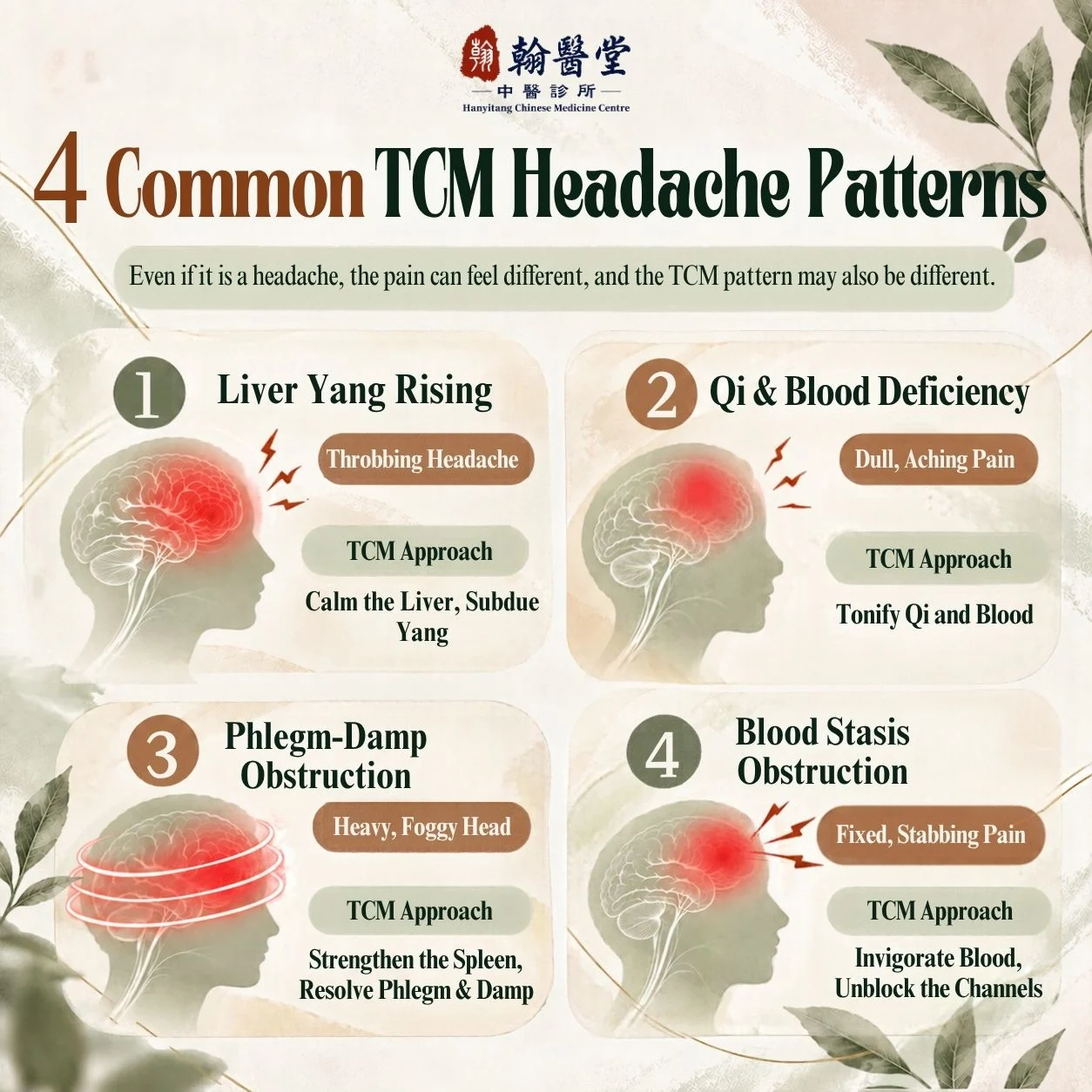
How Does TCM View Headaches? 4 Common TCM Patterns
In Traditional Chinese Medicine, headaches may be associated with the circulation of Qi and Blood, the functioning of internal organs, and the condition of the body’s meridians.
Even when two people experience headaches, the type of pain may differ, leading to different TCM treatment approaches.
1. Liver Yang Rising :Head Pressure and Distending Pain
Common Symptoms:
- A feeling of pressure or distending pain in the head, sometimes accompanied by dizziness
- Irritability and restless sleep
- Headaches that may worsen during emotional stress or agitation
TCM Treatment Approach: Calm the Liver and subdue rising Yang.
2. Qi and Blood Deficiency :Dull, Mild Headaches
Common Symptoms:
- A persistent, dull headache that is usually not severe
- Frequent tiredness and low energy
- Headaches that may become more noticeable after physical or mental exhaustion
TCM Treatment Approach: Tonify Qi and nourish Blood.
3. Phlegm-Dampness Obstruction :Heavy-Headed Sensation
Common Symptoms:
- A heavy feeling in the head, as though it is wrapped or covered
- May be accompanied by dizziness or nausea
- A general feeling of heaviness and fatigue
TCM Treatment Approach: Strengthen the Spleen, resolve Phlegm, and dispel Dampness.
4. Blood Stasis Obstructing the Meridians :Fixed, Stabbing Pain
Common Symptoms:
- Sharp, stabbing headache pain
- Pain that tends to occur in a specific location
- Headaches that may persist for a long time or recur frequently
TCM Treatment Approach: Promote Blood circulation and unblock the meridians.
Note: The above descriptions represent common TCM diagnostic patterns. A TCM pattern cannot be determined based on headache symptoms alone. A qualified practitioner must also consider other symptoms, medical history, and relevant examination findings.
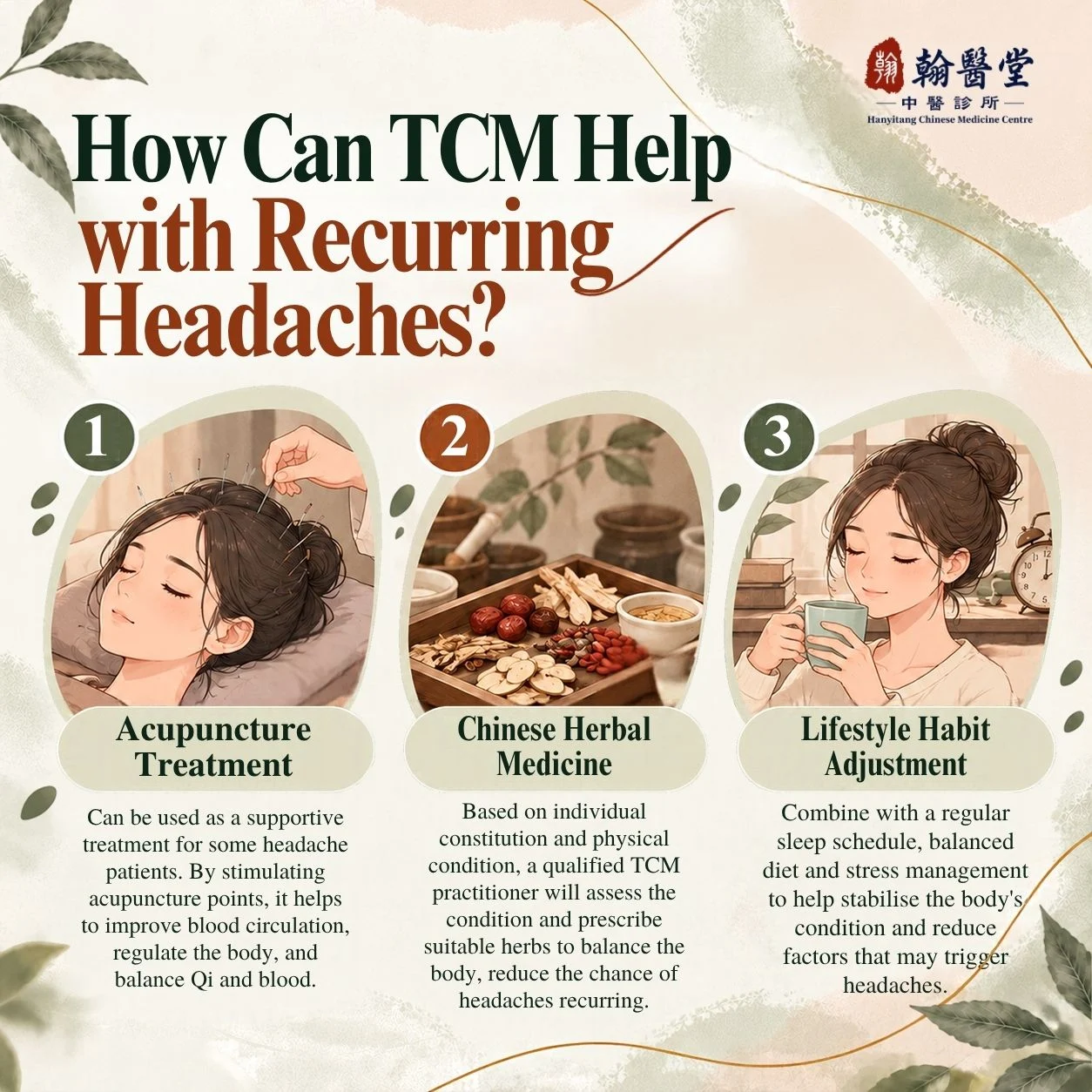
How Can TCM Help Manage Recurring Headaches?
Traditional Chinese Medicine follows the principle of “Pattern Differentiation and Individualised Treatment”, meaning that treatment approaches are tailored to each person’s symptoms and overall health condition.
For example, someone who experiences recurring headaches with dizziness and irritability may require a different TCM treatment approach from someone who frequently feels tired and experiences dull headaches.
A TCM practitioner will typically assess the location, frequency, and characteristics of the headache, along with sleep patterns, dietary habits, and other symptoms through consultation, tongue examination, and pulse diagnosis.
After assessment, the following approaches may be considered:
Acupuncture: May be used as a complementary treatment option for certain headache patients.
Chinese Herbal Medicine: Prescribed by a qualified TCM practitioner based on the individual’s TCM pattern and overall health condition.
Lifestyle Adjustments: Maintaining regular sleep, balanced eating habits, and effective stress management.
Research suggests that acupuncture may help reduce headache frequency in some people with migraines or tension-type headaches, although results may vary between individuals.
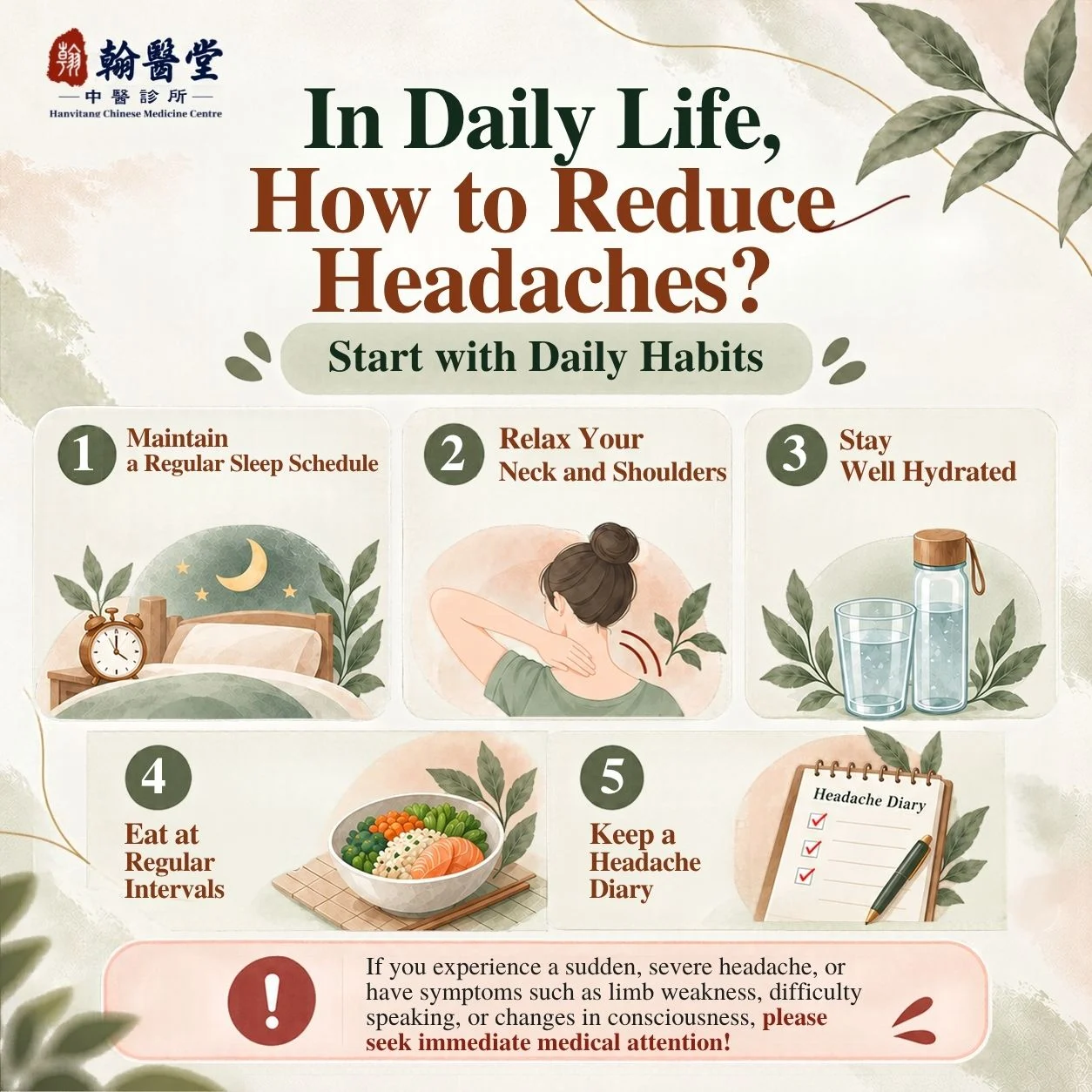
How Can You Reduce Headaches in Daily Life?
Besides seeking professional assessment, making small adjustments to your daily routine may help reduce headache discomfort.
Maintain Regular Sleep: Avoid frequently staying up late and keep a consistent sleep schedule.
Relax Your Neck and Shoulders: Take regular breaks to stretch and move around during long working hours.
Stay Hydrated: Drink enough water throughout the day, especially in hot weather.
Eat Regularly: Avoid frequently skipping meals.
Keep a Headache Diary: Record when headaches occur, the symptoms you experience, and any possible triggers.
If your headaches become more frequent or you regularly need painkillers, it is advisable to seek medical assessment early.
If you experience a sudden, severe headache, especially when accompanied by weakness in your arms or legs, difficulty speaking, or changes in consciousness, seek emergency medical attention immediately.
Don’t Let Recurring Headaches Become Part of Your Everyday Life!
Headaches affect everyone differently, and their underlying causes may vary.
Instead of simply relying on temporary pain relief every time a headache occurs, it is important to understand your body’s condition.
If you frequently experience recurring headaches, neck and shoulder tension, or poor sleep, you are welcome to book a consultation at Han Yi Tang.
Our qualified TCM practitioners can provide an individualised TCM assessment to help you better understand your condition and explore suitable treatment approaches.