
Your pants fit perfectly in the morning, but after lunch, the waistband starts feeling tighter. Every time you take photos, you find yourself editing out your waist area. When sitting down, you may even instinctively pull your clothes down, worried that your belly looks too obvious.
What’s even more frustrating is that you’ve already been eating less and cutting down on carbohydrates, yet your lower belly seems like a “permanent resident” that refuses to go away.
This often makes people wonder: “Am I just easily to gain weight?”
In fact, irregular eating habits, prolonged sitting, poor digestion, insufficient sleep, and even daily posture can all make your lower belly appear more prominent. Over time, these factors may contribute to easier fat accumulation, making weight management feel more challenging.
Before finding the right solution, first identify what type of belly shape you have!
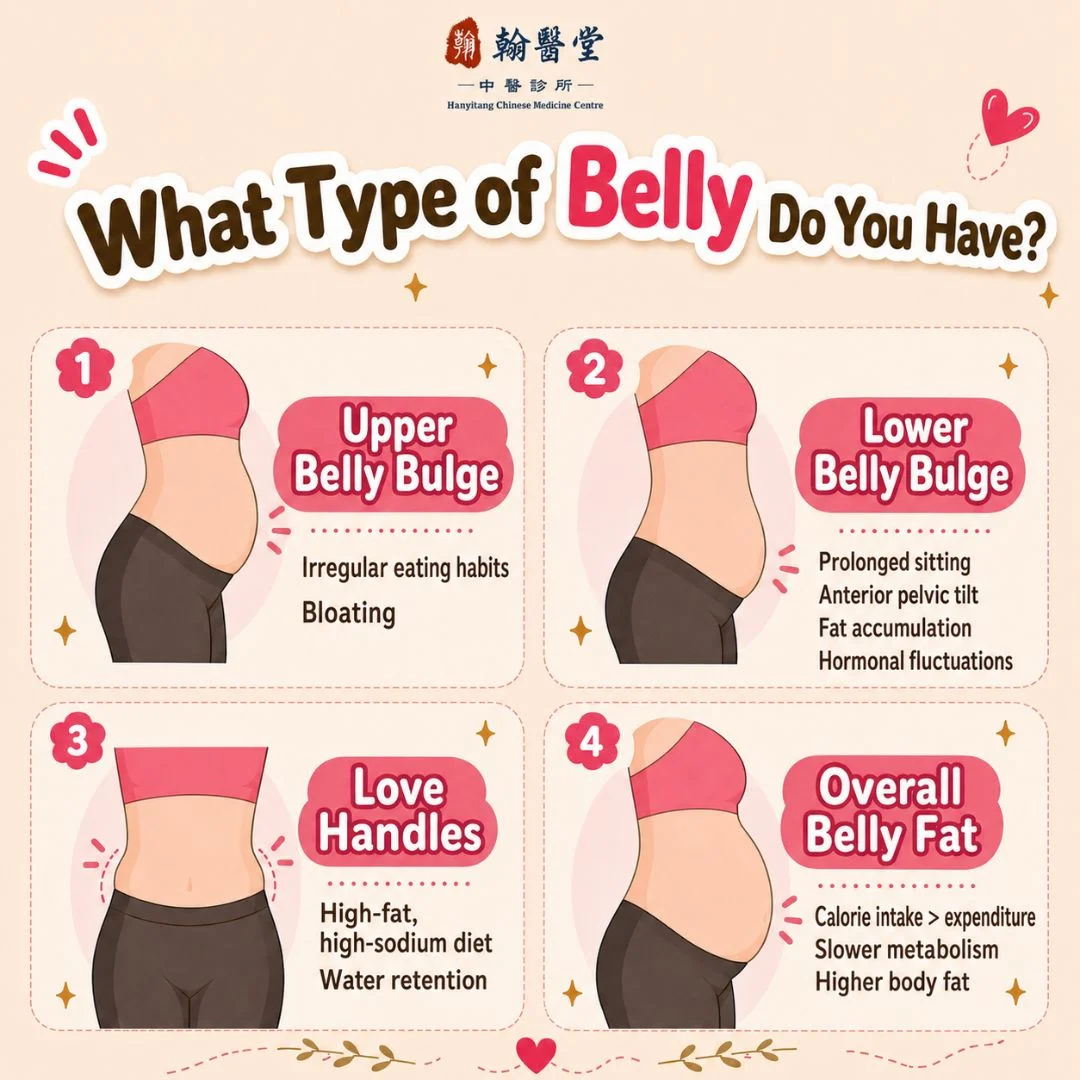
1. Upper Belly Protrusion
If your upper abdomen tends to look bigger after meals, it may not always be caused by fat. It could also be related to bloating caused by eating too quickly, irregular meal times, or overeating.
Many office workers skip breakfast, then eat a large lunch due to hunger. During busy days, some rely on sugary drinks and snacks to get through the day. After work, social meals often involve heavier, oilier, or saltier foods.
This eating pattern can increase digestive stress, making the upper abdomen feel constantly bloated and uncomfortable.
2. Lower Belly Protrusion
Sitting for long periods, insufficient physical activity, and irregular bowel movements may contribute to fat accumulation around the lower abdomen, making the belly appear more noticeable.
For women, hormonal fluctuations before and after menstruation may also cause temporary water retention and bloating, making the lower belly look more swollen.
In addition, anterior pelvic tilt or poor sitting posture can push the abdomen forward. Even with a normal body fat percentage, the belly may still appear more prominent from the side.
3. Love Handles / Side Waist Fat
Fat around the waist sides cannot be removed simply by doing a few waist-twisting exercises.
A lack of exercise combined with a long-term intake of high-calorie foods can lead to fat accumulation around the waist and abdomen.
A high-sodium diet may also increase water retention, making the waist appear wider and more swollen.
As we age, a slower metabolism, long-term stress, and insufficient sleep may further contribute to fat accumulation around the abdominal area.
4. Overall Abdominal Fat
If your entire abdomen looks more prominent, take a moment to reflect on your lifestyle habits:
Do you often eat late-night snacks?
Drink sugary beverages frequently?
Prefer oily, salty, or high-calorie foods?
Stay up late regularly?
This is often related to a higher body fat percentage.
When calorie intake consistently exceeds the calories your body burns, combined with low activity levels, excess energy is stored as fat in the body. Over time, fat may accumulate around the abdomen, leading to a noticeable “belly pouch.”
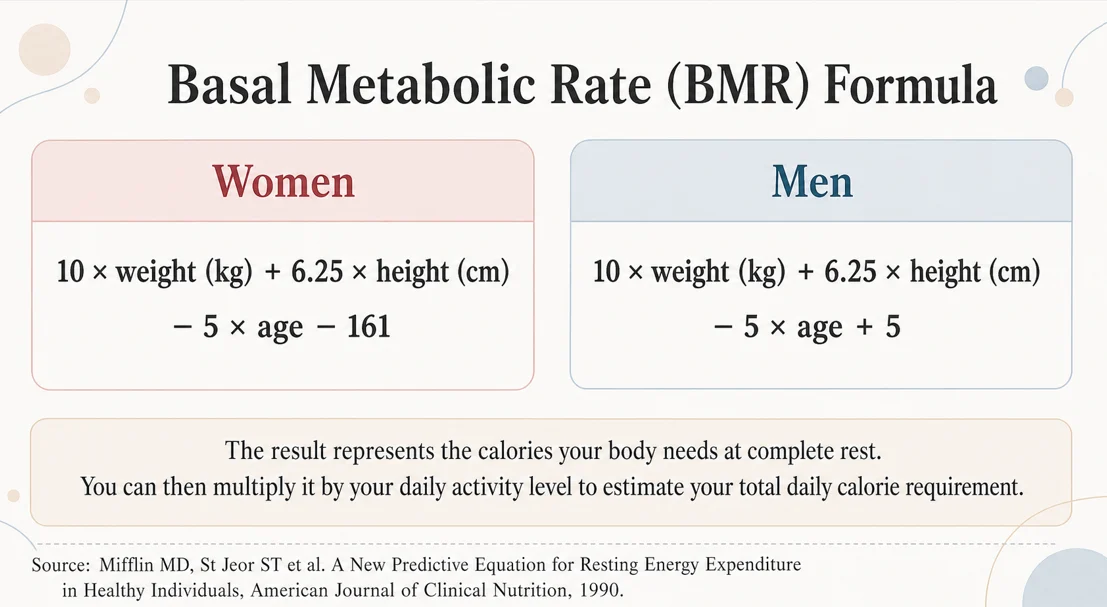
Many people do not know how many calories their body actually needs each day.
You can start by calculating your Basal Metabolic Rate (BMR):
These 4 Habits May Be Making Your Belly Harder to Slim Down!
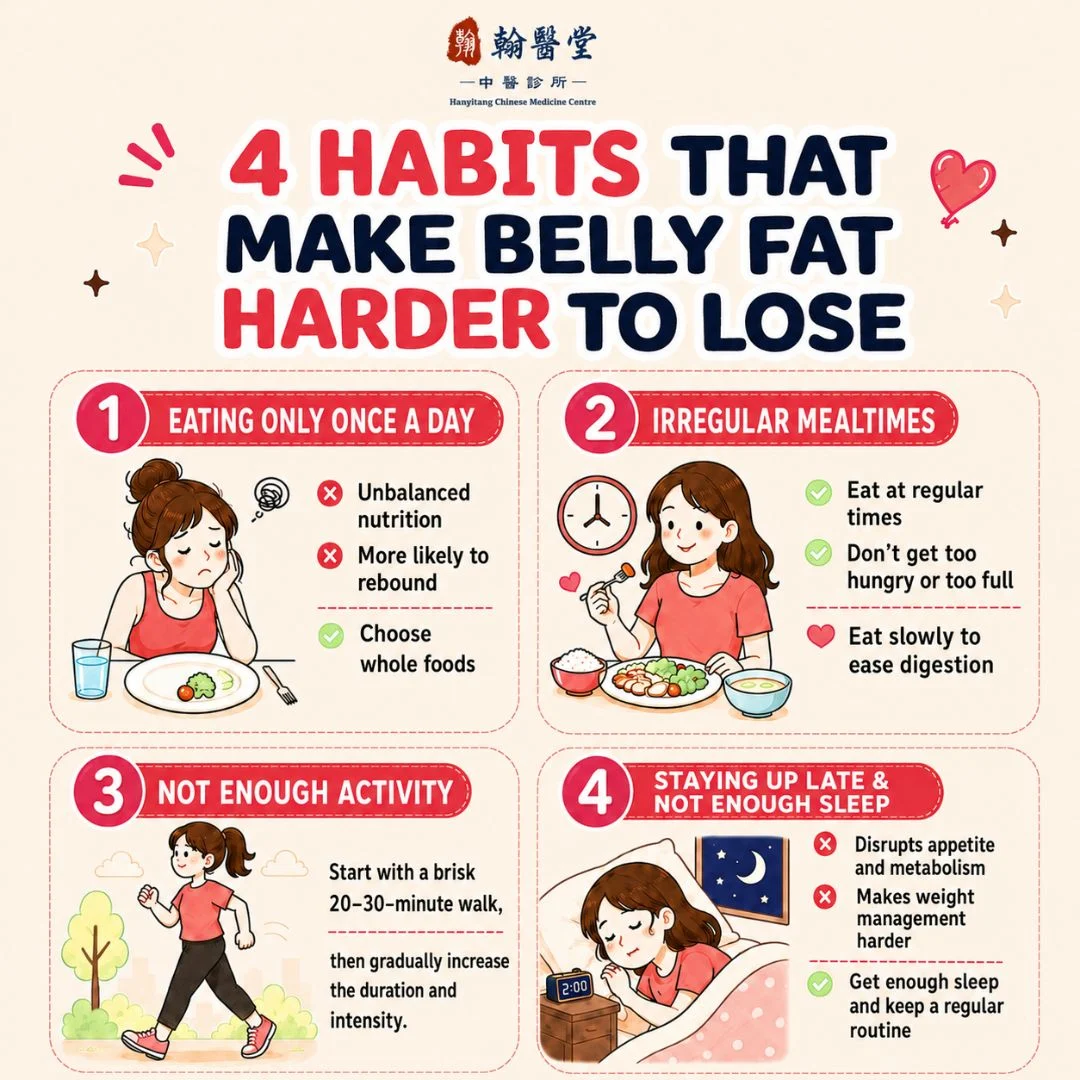
The key is not simply “eating less”, but building healthier lifestyle habits.
1. Eating Only One Meal a Day
Skipping breakfast, eating randomly during the day, or completely avoiding meals may lead to short-term weight loss, but it can also increase the chance of weight rebound.
Instead of constantly restricting food intake, focus on balancing each meal with more whole foods and proper nutrition.
2. Irregular Meal Times
Try to maintain regular meal schedules and avoid letting yourself become extremely hungry.
Eating slowly and avoiding overeating can also help reduce digestive stress.
3. Lack of Physical Activity
If you are not used to exercising, start with simple activities such as brisk walking for 20–30 minutes a day, 5 days a week, then gradually increase the duration and intensity.
Reminder:
Sit-ups can strengthen abdominal muscles, but they cannot directly burn belly fat. To improve abdominal shape, combine full-body exercise, balanced nutrition, and sufficient rest.
4. Frequently Staying Up Late & Lack of Sleep
Insufficient sleep can affect appetite regulation, slow down metabolism, and make weight management more difficult.
Your Body Condition May Also Affect Your Weight Loss Progress.
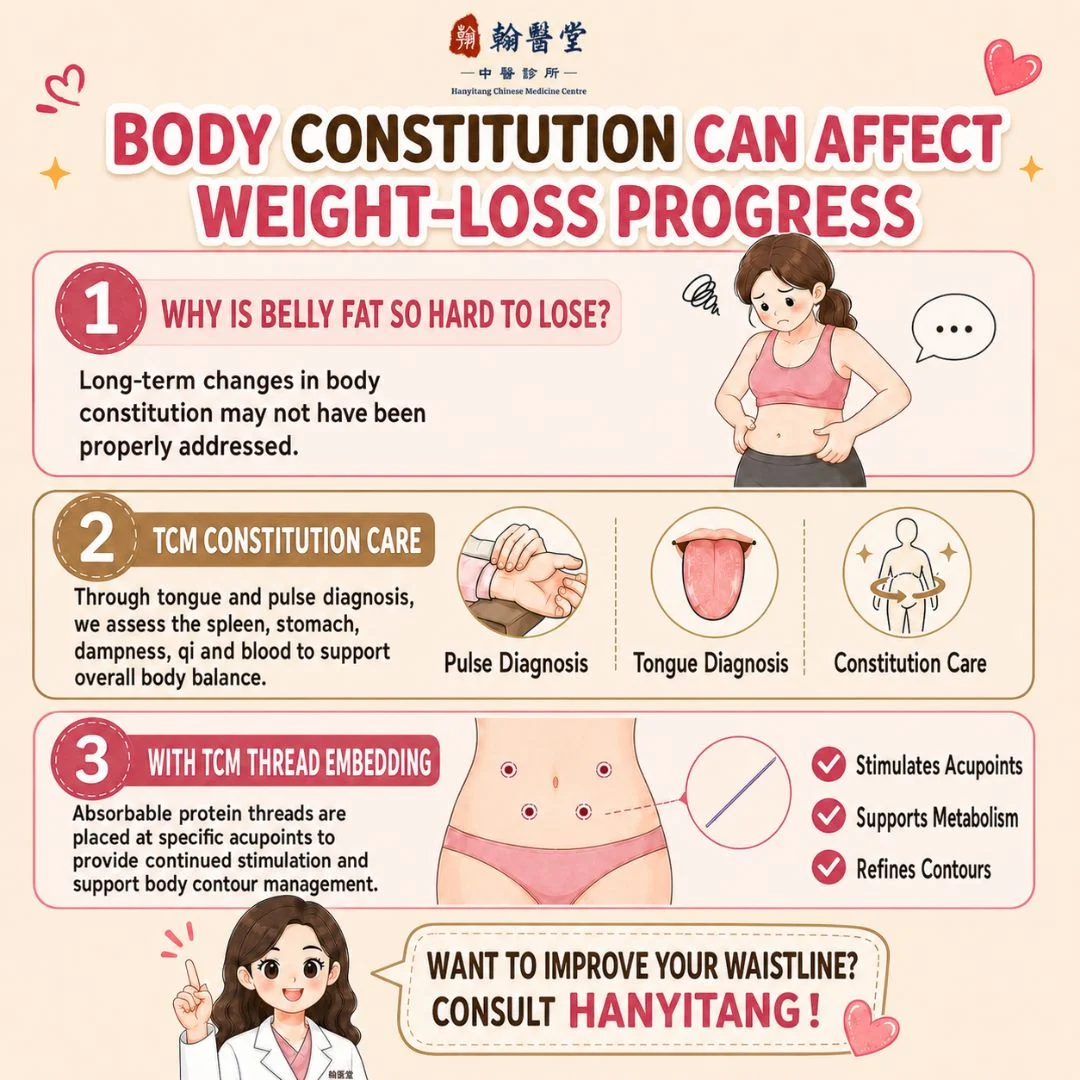
If your lower belly still does not improve despite lifestyle adjustments, it may be related to long-term accumulated body condition changes.
Traditional Chinese Medicine (TCM) focuses on understanding your daily habits and assessing your body condition through tongue and pulse observation. It considers factors such as digestive function, body moisture balance, and blood circulation when creating a personalized approach.
Combined with TCM thread embedding therapy, which uses absorbable protein threads inserted into specific acupuncture points, it may help stimulate metabolism and improve abdominal body contours.
Want to understand your body condition and find a suitable way to improve stubborn waist and belly concerns?
Contact Han Yi Tang for consultation.