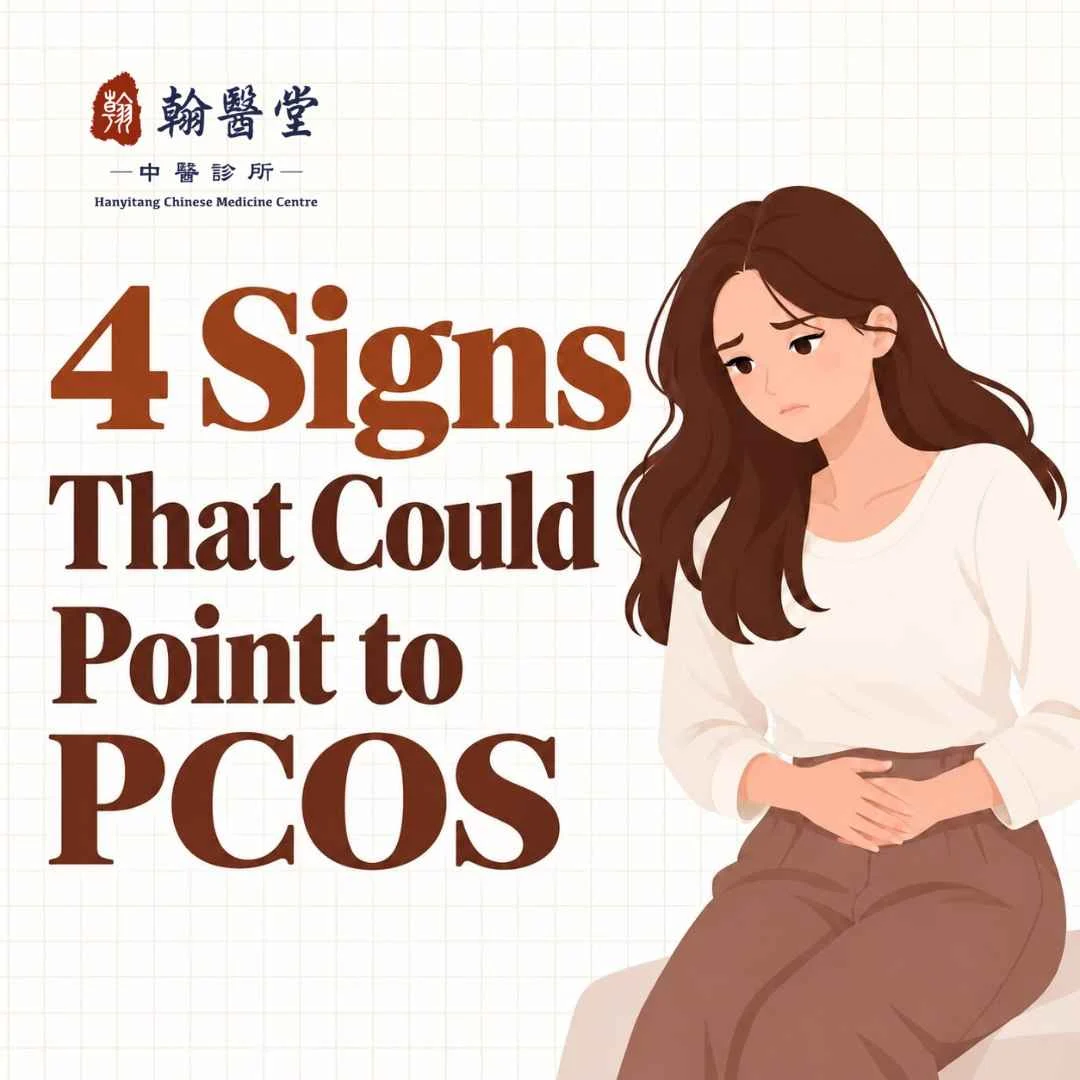
Does “polycystic” mean there are lots of cysts on the ovaries? PCOS can also be linked to irregular periods, acne and changes in ovulation.
Your period may be on time one month, then disappear for two or three months. You might also have recurring acne or find it hard to tell when you ovulate while trying to conceive. These changes can leave you wondering, “Could I have PCOS?”
Polycystic ovary syndrome (PCOS) is a condition linked to changes in hormones and ovulation. It affects people in different ways, so one symptom alone cannot tell you whether you have it.
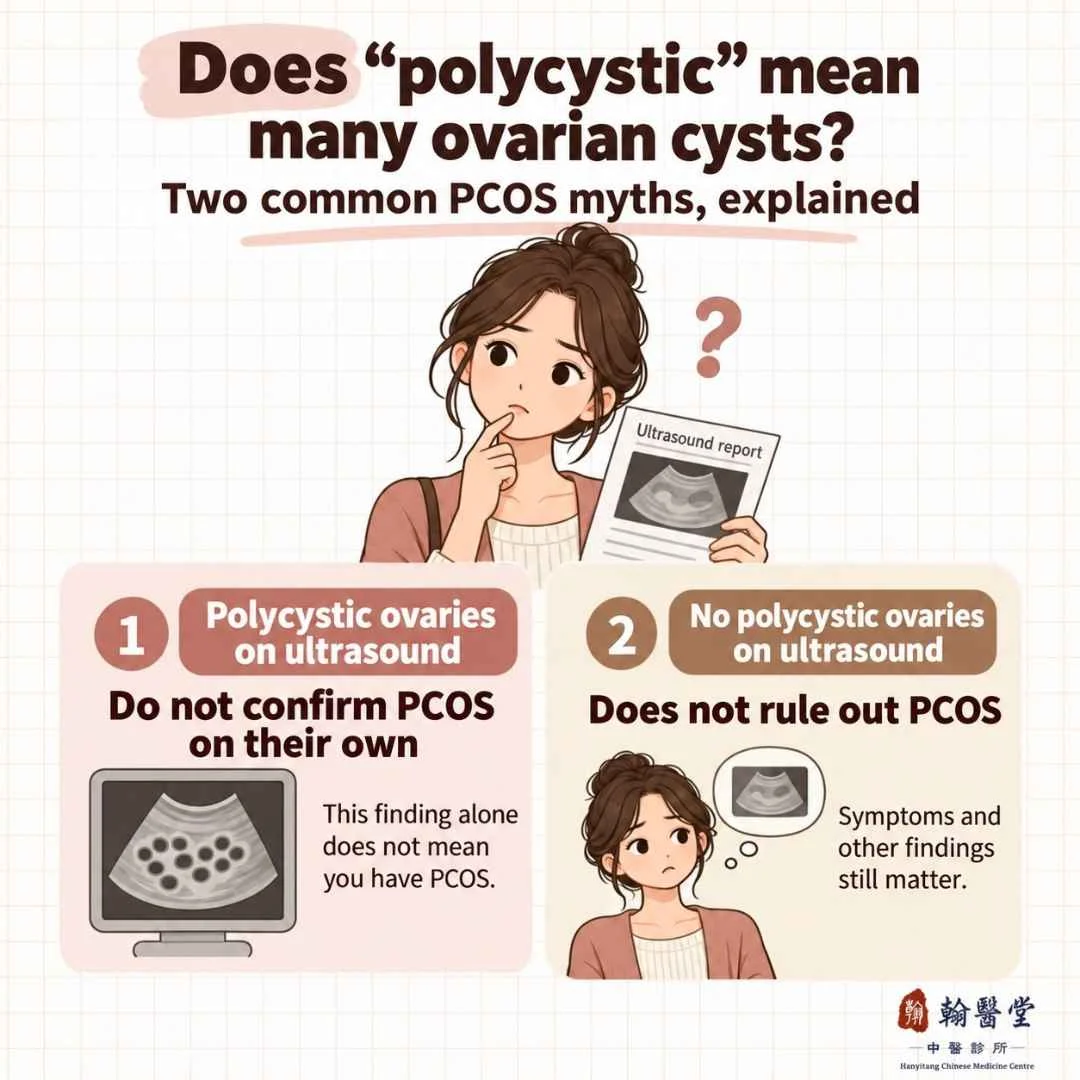
This is a common misunderstanding. An ultrasound showing polycystic ovaries does not confirm PCOS on its own. Likewise, an ultrasound that does not show them does not rule out PCOS.
A doctor will look at your periods, symptoms and test results, while checking for other possible causes. So if you see “polycystic ovaries” on a report, there is no need to jump to a conclusion.
What Are the Common Signs of PCOS?
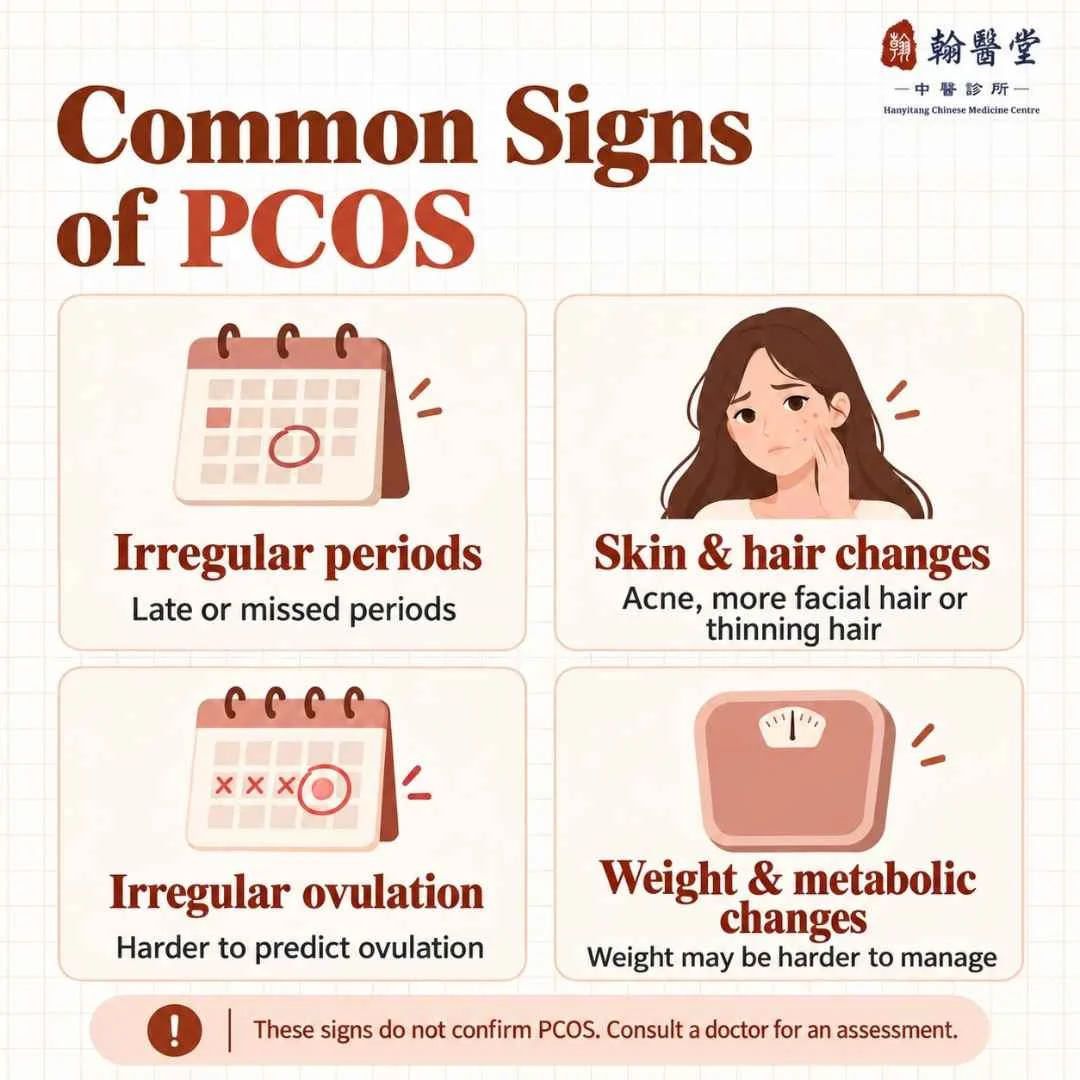
PCOS may cause:
- Irregular periods: Periods that often come late, are far apart or stop for a long time.
- Skin and hair changes: Recurring acne, more facial or body hair, or thinning hair on the head.
- Irregular ovulation: Some people only notice this when they start trying to conceive.
- Weight or metabolic changes: Weight may be harder to manage, but people of any body size can have PCOS.
Having these signs does not necessarily mean you have PCOS.
How Does Traditional Chinese Medicine View PCOS?
PCOS is a diagnosis used in modern medicine. Traditional Chinese medicine (TCM) does not have one traditional term that matches it exactly. Instead, a TCM practitioner looks at the person’s main concerns, such as irregular periods, missed periods or difficulty conceiving.
Two people diagnosed with PCOS may have different concerns. One may go months without a period, another may struggle with acne, while someone else may notice irregular ovulation when trying to conceive. A TCM practitioner will ask about periods, sleep, mood and overall health before discussing a care plan.
Why Does TCM Focus on Individual Care?
In TCM, a practitioner looks at patterns across a person’s overall health. These may include what TCM calls kidney deficiency, dampness, liver qi stagnation or blood stasis. These TCM patterns cannot diagnose PCOS.
Even if two people both have irregular periods, the same approach may not suit them both. A qualified TCM practitioner should assess whether herbs or acupuncture are suitable. Tell them about any diagnosis, medicines you take and plans to conceive.
Can PCOS Affect Pregnancy?
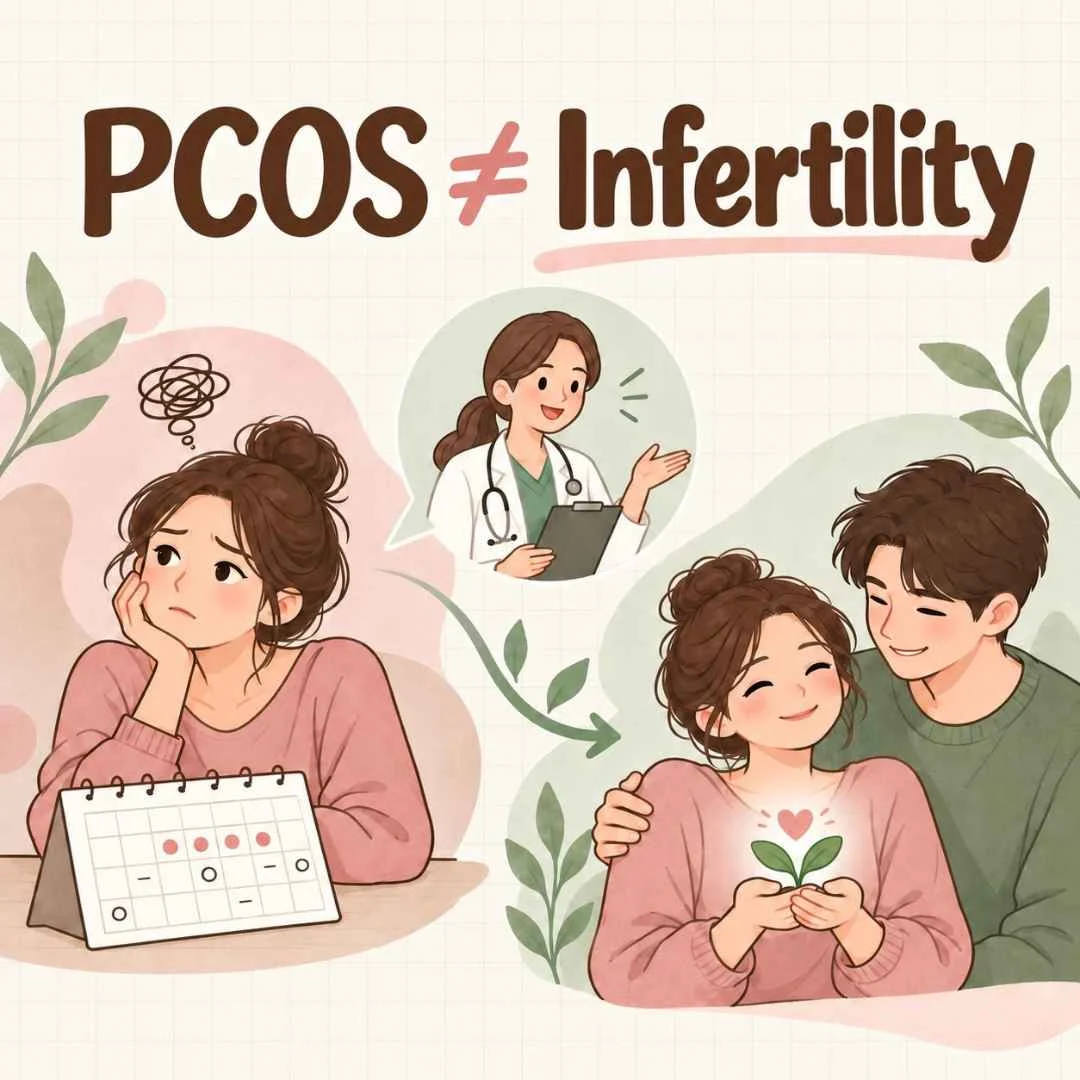
PCOS can make ovulation less regular, which may make it harder for some people to conceive. But PCOS does not mean you cannot get pregnant, and it does not cause fertility problems for everyone.
If you are trying to conceive, speak with a gynecologist or another relevant doctor about ovulation and your options. If you also want TCM care, share your test results, medicines and pregnancy plans with your TCM practitioner.
What Can You Do to Look After Your Health?
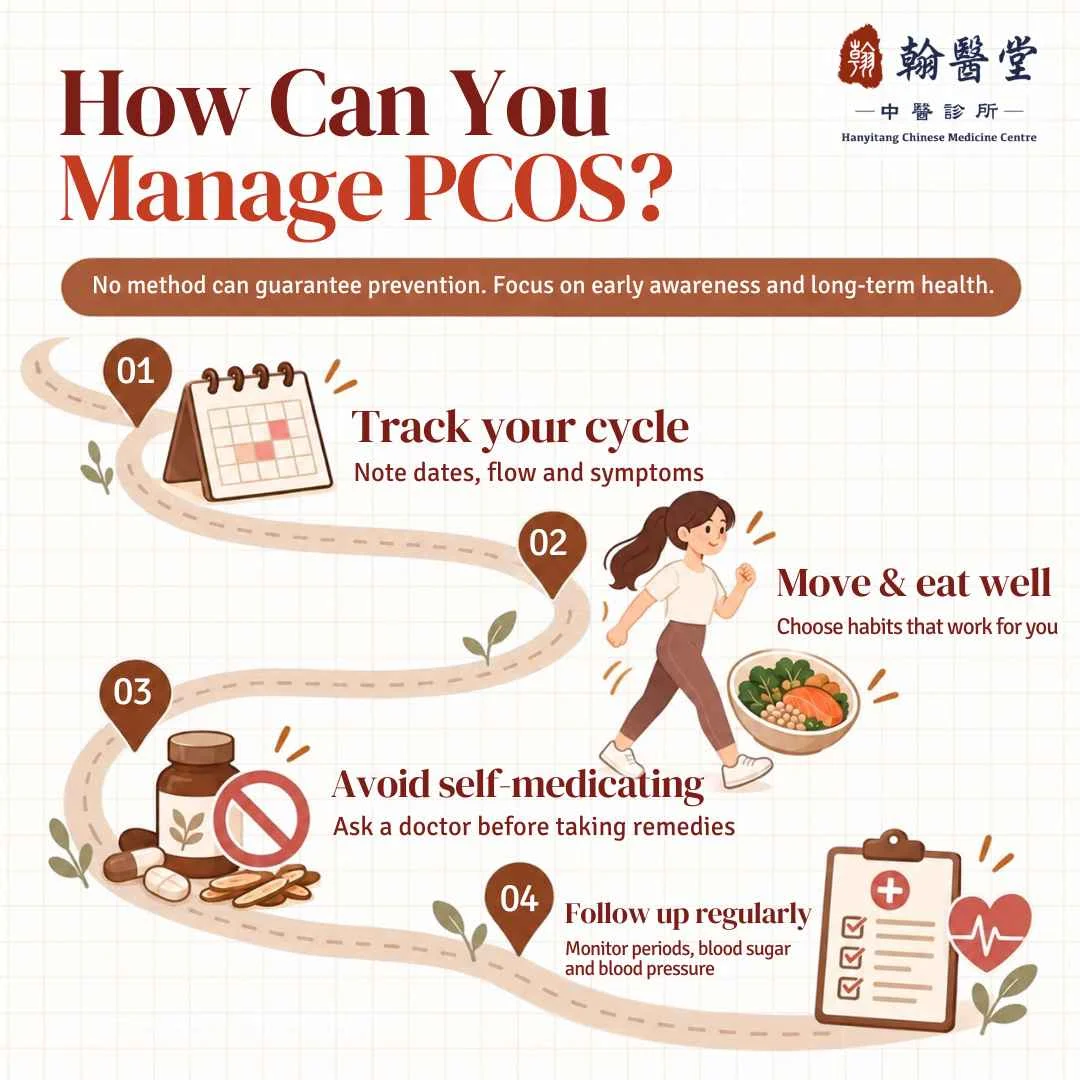
There is no guaranteed way to prevent PCOS. Instead of worrying that you have done something wrong, focus on noticing changes early and looking after your long-term health:
- Track your periods: Note when each period starts, how long your cycle is, your flow and any symptoms.
- Build habits that work for you: Regular activity, balanced meals and enough sleep can support your health.
- Avoid treating yourself with “period-regulating” medicines or herbal teas: Check with a qualified healthcare professional first, especially if you are trying to conceive or receiving treatment.
- Keep up with follow-up care after a diagnosis: Follow your doctor’s advice on monitoring your periods, blood sugar, blood pressure and other health concerns.
A Practitioner’s Reminder: When Should You Get Checked?
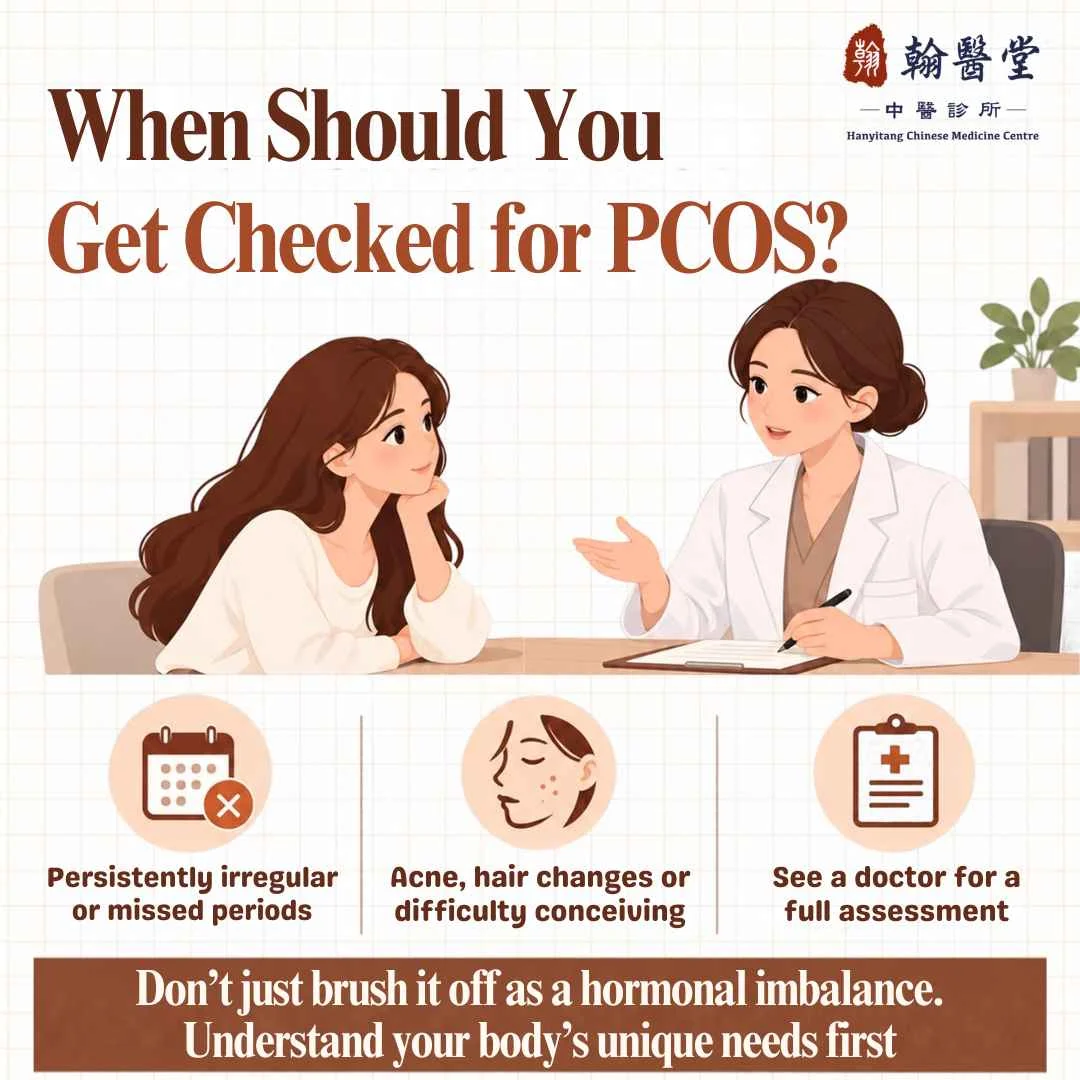
If your periods stay irregular, stop for a long time, or you also notice acne, hair changes or difficulty conceiving, speak with a gynecologist or another relevant doctor about whether you need tests.
If irregular periods are worrying you, you are welcome to consult Han Yi Tang.