
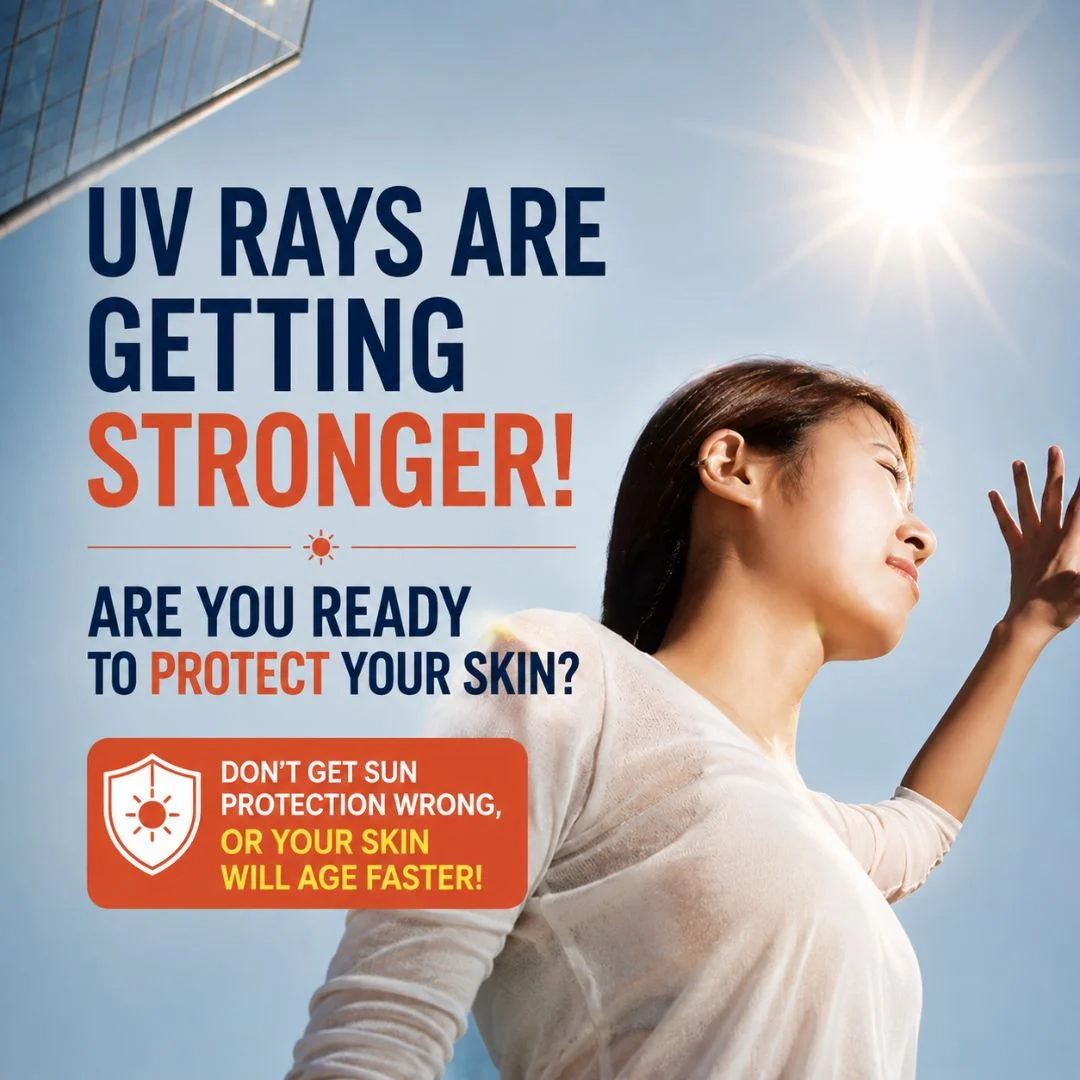
How Strong Is Malaysia UV Index? The next few months may be a period when our skin is especially vulnerable to UV damage.
Recently, the Malaysian Meteorological Department (MET Malaysia) advised the public to pay closer attention to UV intensity. With the Southwest Monsoon expected to continue until September and relatively drier weather during this period, sun protection becomes even more important.
UV radiation should never be underestimated. Even on cloudy days, UV rays can still penetrate through the clouds, meaning your skin may still be exposed to sun damage without you realising it.
How Do You Read the UV Index?
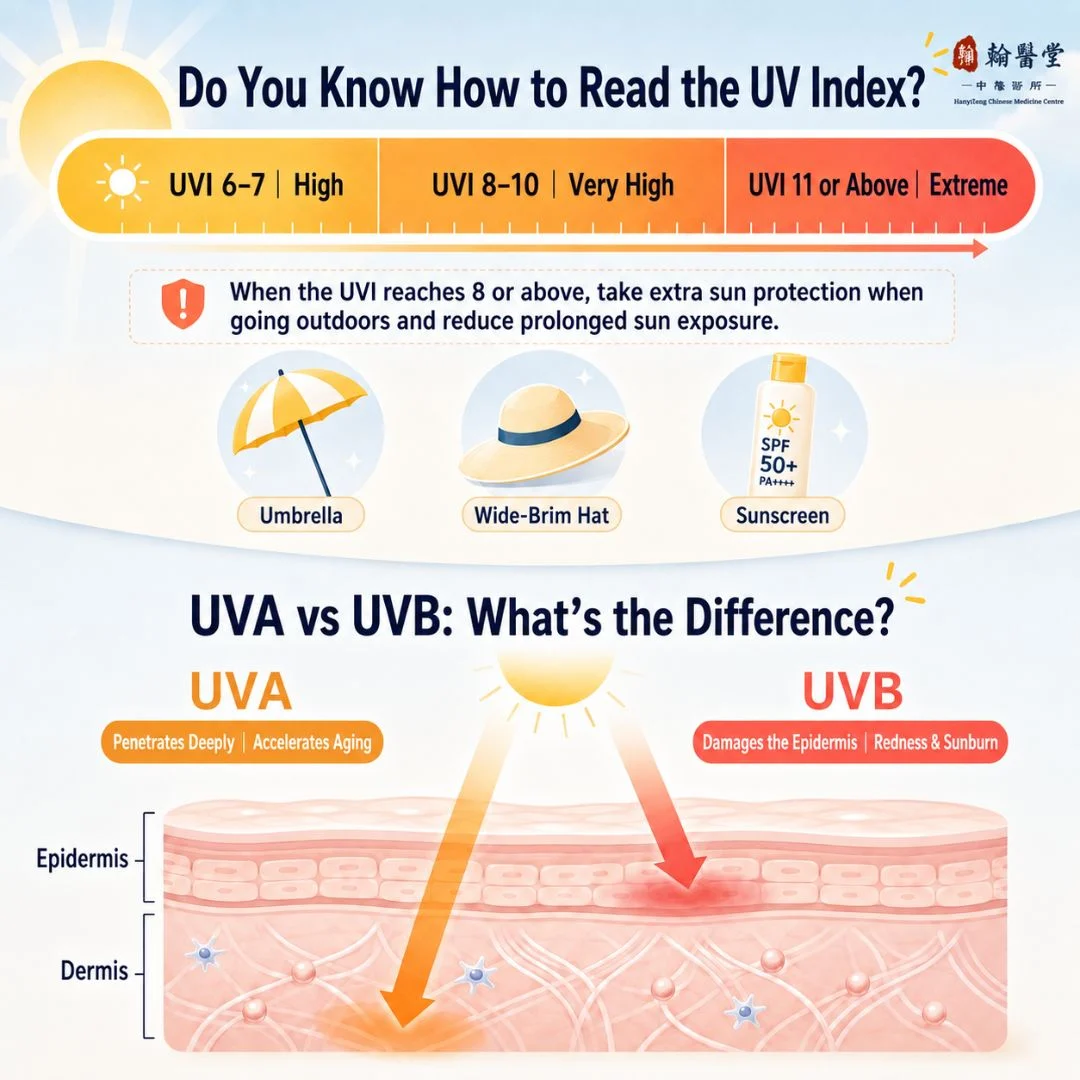
UV radiation usually reaches its highest level around midday. MET Malaysia publishes hourly UV Index (UVI) readings from 11:00 AM to 4:00 PM daily.
The higher the UVI, the stronger the UV radiation and the greater the risk of skin damage.
- UVI 6–7 | High
- UVI 8–10 | Very High
- UVI 11 or above | Extreme
When the UVI reaches 8 or above, extra sun protection is recommended when going outdoors, while prolonged sun exposure should be minimised whenever possible.
What Is the Difference Between UVA and UVB?
- UVA | Penetrates Deeper into the Skin and Accelerates Ageing
Long-term exposure may contribute to collagen loss, fine lines, sagging and pigmentation. UVA can also pass through windows, so your skin may still be exposed even when you are indoors near a window.
- UVB | Mainly Damages the Skin’s Surface
UVB can cause redness, burning, peeling and sunburn, especially when sunlight is particularly strong.
Beware of Summer Heat, Heat and Dryness
From a Traditional Chinese Medicine (TCM) perspective, the effects of prolonged sun exposure may be understood in relation to summer heat, heat and dryness.
Excessive sun exposure may deplete the body’s fluids and moisture, leaving the skin dry, red and dull.
When excessive heat accumulates and the circulation of Qi and blood becomes less smooth, signs of skin ageing may also become more noticeable.
For this reason, TCM skincare places emphasis on the concept of “prevention before illness occurs” — reducing excessive sun exposure, practising proper sun protection, and maintaining healthy daily habits, hydration and diet to support skin balance.
Long-term sun exposure may contribute to dryness, dullness, pigmentation and fine lines, accelerating the appearance of skin ageing.
What Happens to Your Skin After Excessive Sun Exposure?
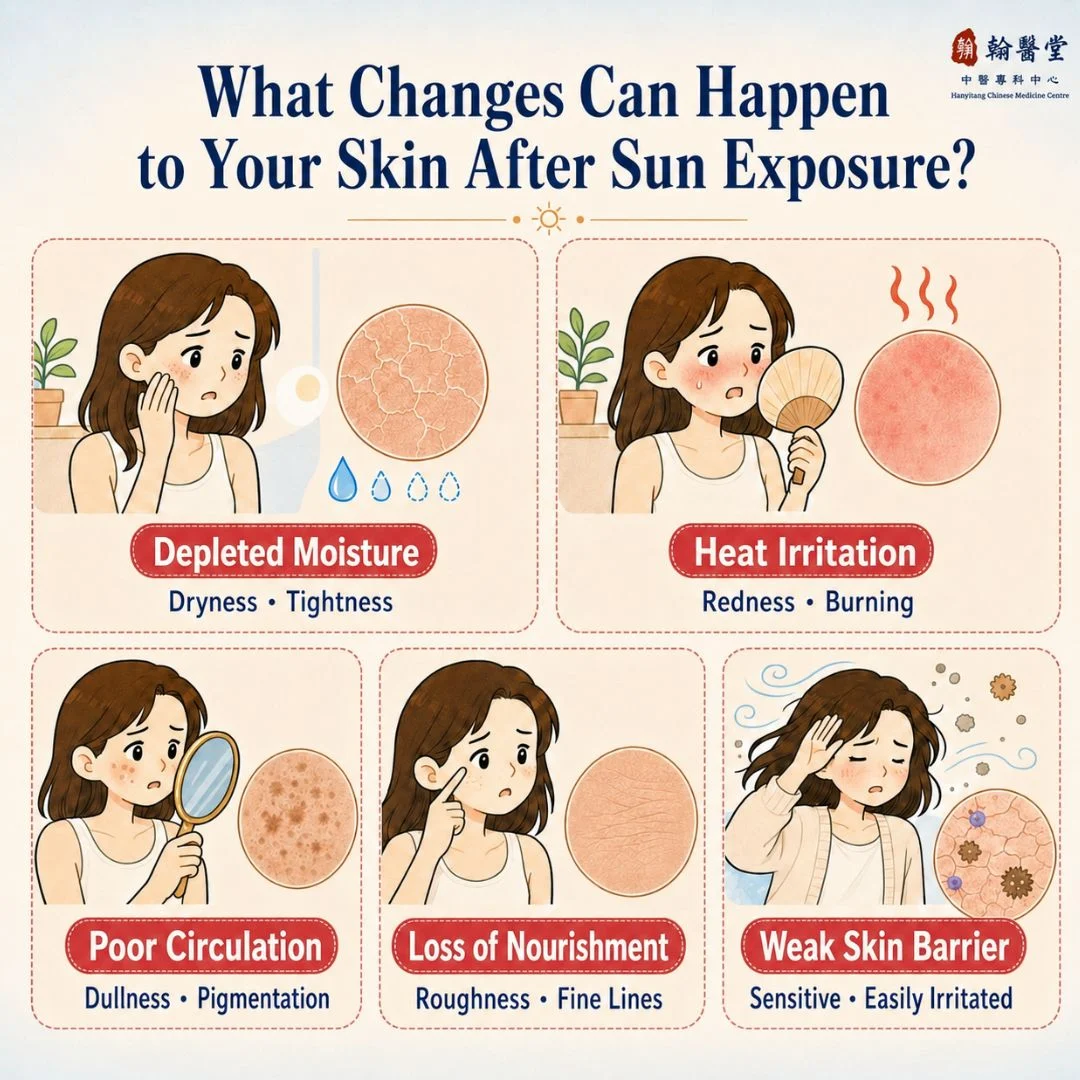
After excessive UV exposure, common skin changes may include:
- Depletion of body fluids: Skin may feel dry, tight and lack radiance.
- Heat affecting the skin: Redness, warmth, burning or stinging sensations may occur.
- Poor circulation of Qi and blood: The complexion may appear dull or uneven, while pigmentation may become more noticeable.
- Insufficient nourishment of the skin: Repeated and prolonged sun exposure may lead to roughness, fine lines and premature ageing.
- Weakened skin barrier: The skin may become more sensitive and vulnerable to external irritation.
Therefore, sunscreen is not only important for preventing tanning or pigmentation. It is also an essential part of daily anti-ageing care and maintaining healthy, stable skin.
Why Do I Still Get Sunburned Even Though I Apply Sunscreen Every Day? How To Choose Sunscreen?
Even if you apply sunscreen every day, you may still get tanned or sunburned if you are not using enough product, applying it unevenly, or choosing a protection level that is unsuitable for your daily activities.
When sunscreen is not applied correctly, the level of protection may be insufficient, allowing UV rays to affect the skin.
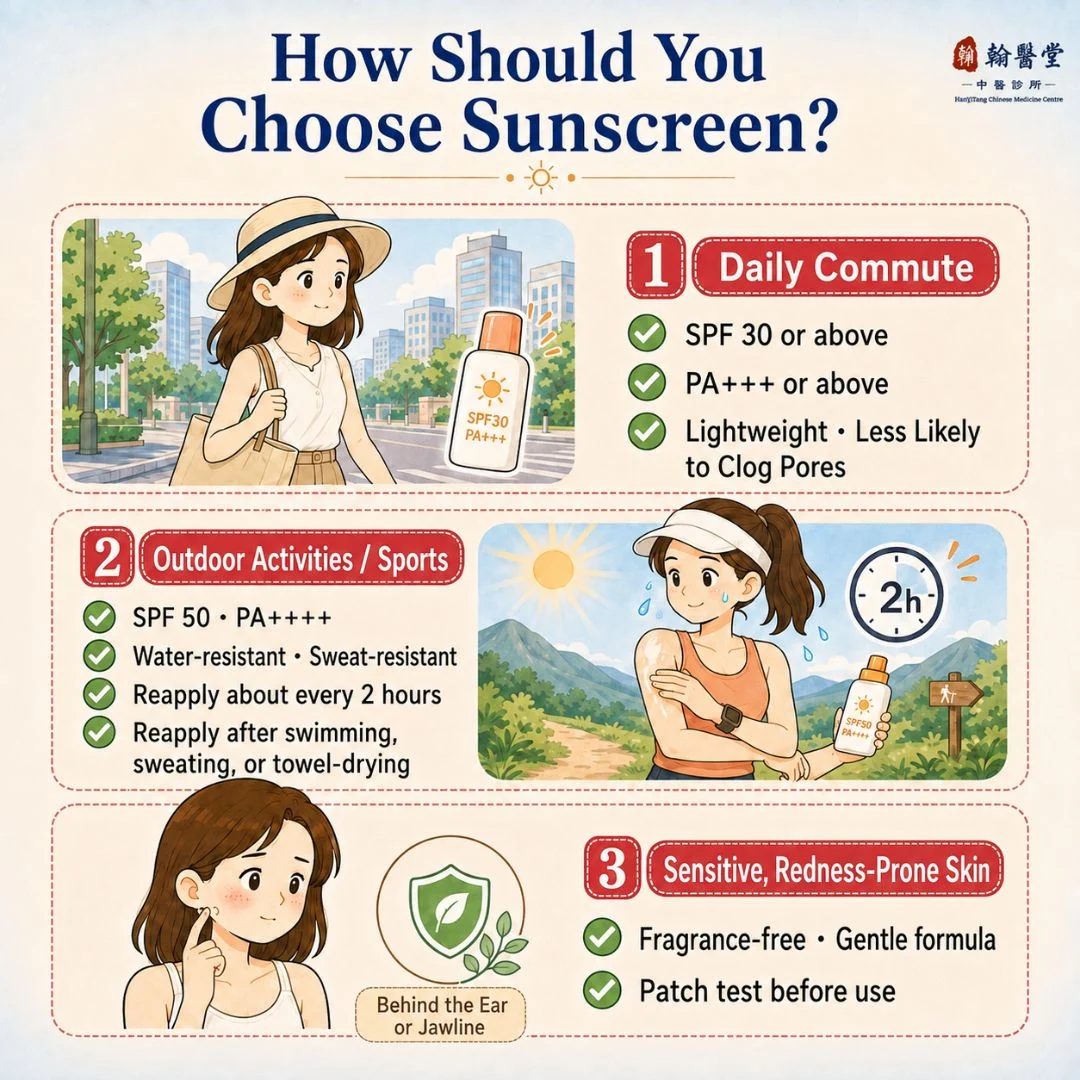
When choosing sunscreen, there is no need to always look for the highest SPF. The key is to choose a product that suits your skin type, lifestyle and feels comfortable on your skin.
1. Daily Commute
- SPF30 or above
- PA+++ or above
- Lightweight texture that is less likely to clog pores
2. Prolonged Outdoor Activities or Exercise
- SPF50 and PA++++
- Water-resistant and sweat-resistant formula
- Reapply approximately every 2 hours
- Reapply after swimming, excessive sweating or towel drying
3. Sensitive or Redness-Prone Skin
- Fragrance-free and gentle formula
- Perform a patch test behind the ear or along the jawline before use
4 Steps to Proper Sun Protection ☀️
① Apply Enough Sunscreen
Use an adequate amount on both the face and neck, and make sure it is spread evenly.
② Apply Before Going Outdoors
It is recommended to apply sunscreen approximately 15–20 minutes before sun exposure.
③ Apply Evenly Without Missing Any Areas
Do not forget commonly overlooked areas such as the ears and neck.
④ Reapply When Necessary
If you are outdoors for long periods or have been sweating, remember to reapply sunscreen.
Gentle reminder: After wearing sunscreen, remember to cleanse your skin properly to prevent excess oil and residue from building up and clogging the pores, which may affect the skin’s natural renewal process.
Did You Know These Herbal Ingredients May Also Help Soothe Skin After Sun Exposure?
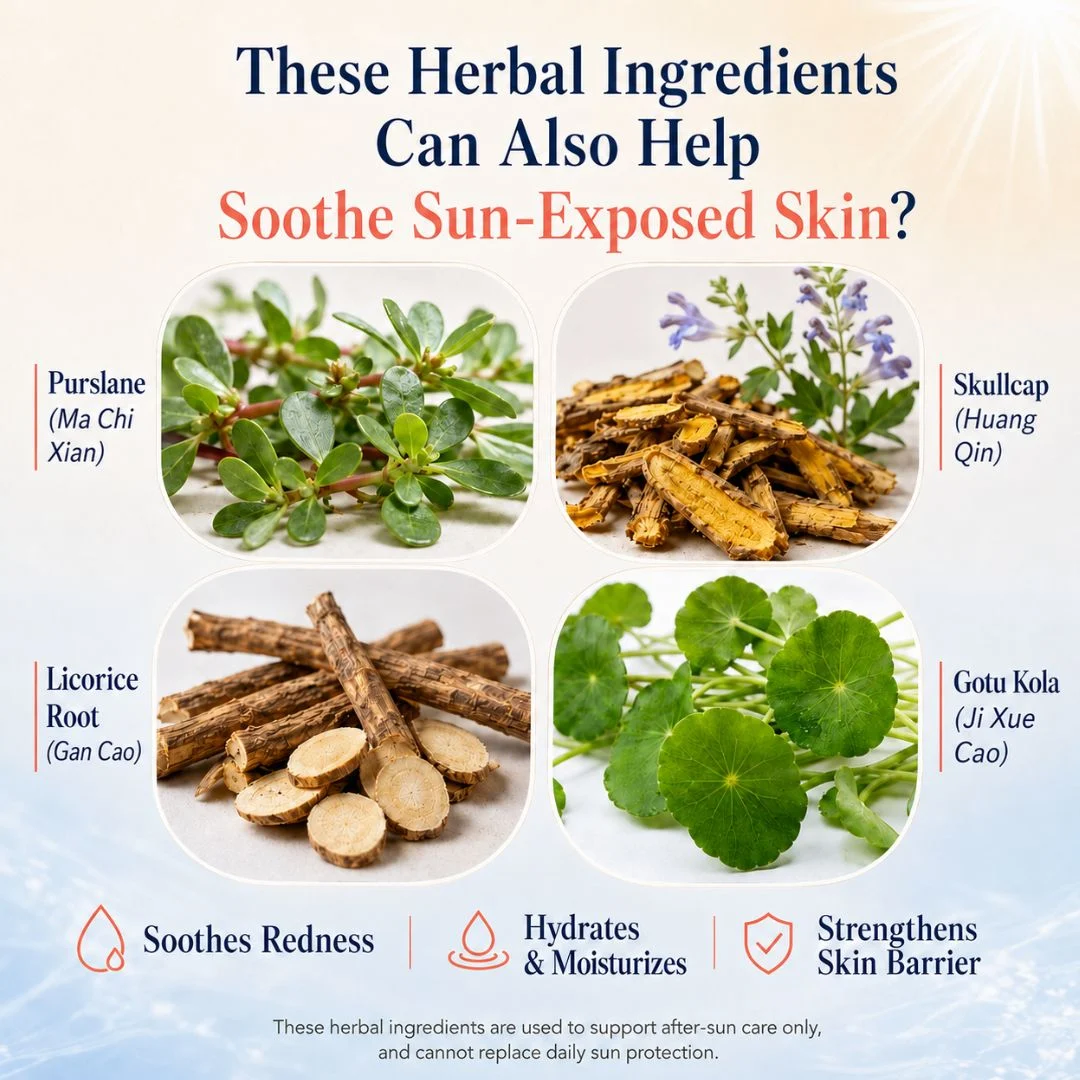
Ingredients such as purslane, Scutellaria baicalensis, licorice and Centella asiatica are commonly used for their soothing, moisturising and skin-supporting properties. They may help relieve redness, dryness and tightness after sun exposure.
However, these herbal ingredients are mainly used as supportive after-sun care and should not replace daily sun protection.
As everyone’s body constitution and skin condition are different, if you are considering herbal teas or oral Chinese herbal remedies, it is recommended to consult a qualified TCM practitioner first.
A proper TCM assessment can help determine which herbs and methods are suitable for you. Avoid consuming herbs without professional advice or applying raw herbal ingredients directly onto the skin.
Tips: How Should You Care for Your Skin After Sun Exposure?
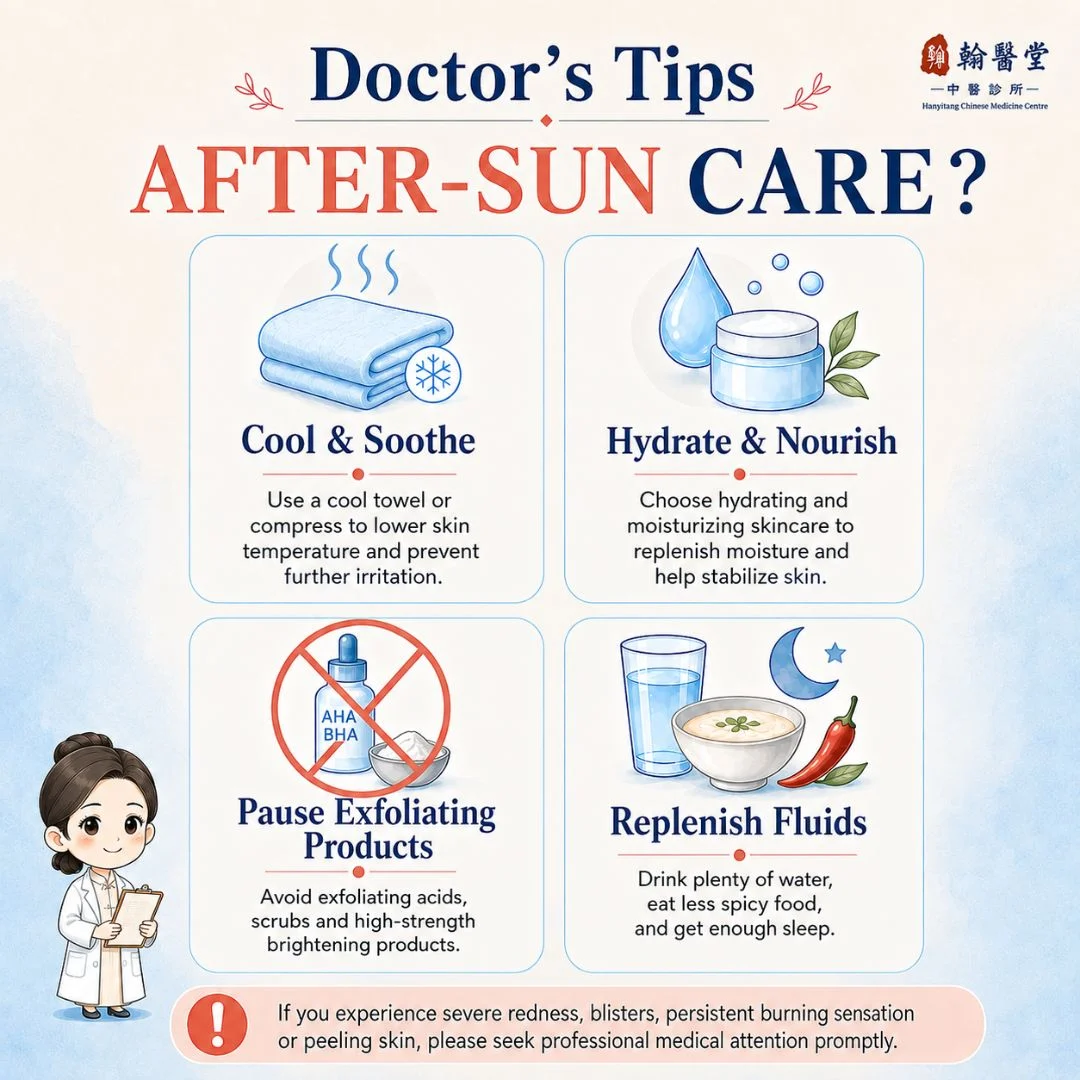
After-sun care should focus on clearing heat, replenishing moisture and body fluids, and nourishing Yin:
- Cool the skin gently: Apply a cool towel to the skin. Avoid placing ice directly onto the skin and avoid washing your face with hot water immediately after sun exposure.
- Hydrate and soothe: Choose a gentle moisturising serum or cream to replenish moisture and help calm the skin.
- Pause irritating skincare products: Avoid exfoliating acids, scrubs and highly concentrated brightening products after sun exposure. Give your skin time to recover.
- Replenish fluids from within: Drink plenty of water, reduce spicy and heat-inducing foods, and get sufficient rest.
If you experience severe redness, blistering, persistent burning pain or significant peeling, seek professional medical attention promptly.
Concerned about skin aging, sagging, or dullness? Feel free to consult Han Yi Tang for personalised advice.